If you live in Lawrence, Eudora, or De Soto, you know that the Kaw Valley (the Kansas River Valley) is a beautiful, fertile region. However, what makes the land so great for farming can make it a nightmare for residential foundations.
Understanding the unique geology beneath your feet is the first step in protecting your home from the shifting soils of Northeast Kansas.
The Legacy of the Glaciers
The geology of the Kaw Valley was largely shaped by the Pre-Illinoian glaciers and the subsequent flow of the Kansas River. As these massive ice sheets melted, they left behind a complex “layer cake” of materials:
- Alluvium: This is the loose sand, silt, and gravel deposited by the river. It is highly porous and moves easily with water.
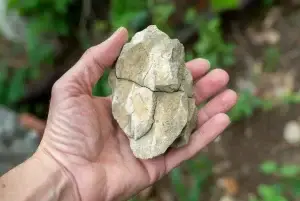
- Glacial Till: A dense, unsorted mix of clay, boulders, and sand left by retreating ice.
- Loess: Wind-blown silt that can be prone to collapse when it becomes oversaturated.
Because these layers aren’t uniform, one side of your house might be sitting on stable till while the other rests on soft alluvium. This discrepancy is a leading cause of foundation settling, where the house sinks unevenly.
The “Sponge” Effect: Expansive Clay
The most notorious resident of Kaw Valley soil is expansive clay. Unlike sandy soils that stay relatively constant in volume, the clay in our region acts like a sponge.
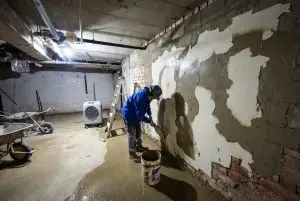
- During Wet Seasons: The clay absorbs water and swells, exerting massive “hydrostatic pressure” against your basement walls. This is often the culprit behind bowed basement walls.
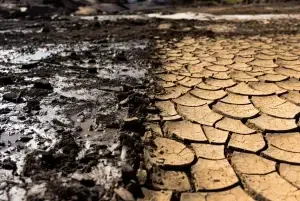
- During Droughts: The clay shrinks and pulls away from the foundation, leaving gaps that allow the structure to shift. We see this frequently during Kansas droughts.
Why “Valley” Homes Face Unique Risks
Homes built within the valley floor deal with a higher water table than those built on the limestone bluffs of Topeka or the higher elevations of Olathe. When the Kansas River rises, the groundwater levels in the valley rise with it.
This increased moisture doesn’t just cause shifting; it leads to basement flooding and hydrostatic pressure that can crack even the thickest concrete slabs.
Protecting Your Home in the Kaw Valley
You can’t change the geology of the region, but you can change how your home interacts with it. Because our soil is so prone to movement, standard “shallow” foundations often fail over time.
To truly secure a home in the Kaw Valley, you often need to bypass the unstable upper layers of soil. This is where the Stratos Pier System comes in. By driving piers deep into the earth—past the shifting clays and alluvium—we can anchor your home to stable strata or bedrock.
Is your foundation fighting the Kaw Valley soil?
If you’ve noticed cracks in your sheetrock or doors that won’t close, it’s likely a sign of the earth moving beneath you. Don’t wait for a small crack to become a major structural failure.
Schedule a free inspection with Advanced Systems of NE Kansas today. We know the local geology, and we know how to fix it.
Related Reading: