In Northeast Kansas, the transition from winter to spring is more than just a change in the weather—it’s a major stress test for your home. As the ground thaws and the “April showers” begin, the soil around your home undergoes a dramatic transformation.
Use this “Spring Forward” Checklist to identify potential issues before they turn into costly structural repairs.
1. Inspect the “Thaw Zone”
As the frost leaves the ground, the soil often settles or shifts. Walk the perimeter of your home and look for:
- Soil Gaps: Check if the dirt has pulled away from the foundation walls. This creates a direct path for water to run down against your basement or crawl space.
- Spongy Ground: If the yard remains saturated long after the snow has melted, you may have a drainage issue that needs to be addressed to prevent hydrostatic pressure.
2. The Gutter and Downspout Audit
Your gutters are your foundation’s first line of defense. Spring is the time to ensure they are working perfectly:
- Clear the Debris: Remove leftover winter grit and fallen twigs.
- Check the Discharge: Ensure downspouts are discharging water at least 5–10 feet away from the foundation. If they are dumping water right at the corner of your house, you’re inviting foundation settling.
3. Interior Basement Scan
Head downstairs with a flashlight and look for the “Spring Trio” of warning signs:
- Hairline Cracks: Look for new or widening cracks in the floor or walls. Even small ones can be a sign of winter foundation woes.
- Efflorescence: Look for a white, powdery substance on the walls. This is mineral residue left behind by evaporating water and is a clear sign of moisture intrusion.
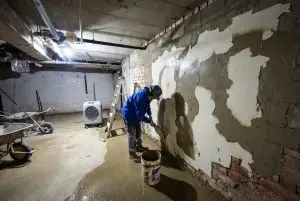
- Damp Odors: A musty smell often precedes a visible leak. If the air feels heavy, it might be time to consider basement waterproofing.
4. Sump Pump Stress Test
Don’t wait for a midnight rainstorm to find out your pump is dead.
- Manual Trigger: Pour a bucket of water into the pit to ensure the float switch triggers the pump.
- Listen for Noises: Grinding or humming without pumping usually means the impeller is clogged or the motor is failing. Check out our tips on sump pump maintenance for a deeper dive.
5. Check the Grading
Over the winter, the “slope” of your yard can change. For the first few rains of spring, watch how the water flows. It should always move away from the house. If you see puddles forming against the foundation, you may need to re-grade the soil to protect your structural integrity.
Don’t Let Spring Showers Bring Basement Flowers (or Mold)
If your spring inspection reveals bowed walls or persistent leaks, catching them early is the key to saving money. Most foundation issues are easier—and cheaper—to fix when they are caught during the spring thaw rather than after a summer drought.
Ready for a professional eye? Schedule a free spring inspection with Advanced Systems of NE Kansas. We’ll help you ensure your foundation is ready for whatever the Kansas weather throws at it.
Related Reading: