If you live in the historic neighborhoods of Lawrence or Topeka, your home’s foundation might look a bit different than the poured concrete walls of a modern suburb. Many of our region’s most beautiful historic homes sit on limestone foundations—sturdy, hand-laid blocks of local stone held together by mortar.
While limestone is incredibly durable, it’s a “living” material that requires a specific type of care. At Advanced Systems of NE Kansas, we understand that treating an 1890s limestone foundation like a 2020s concrete slab is a recipe for disaster.
Here is why your historic Kansas foundation needs a specialized approach.
1. The “Breathability” Factor
Unlike modern concrete, which is designed to be a solid, impermeable barrier, limestone and its original lime-based mortar are breathable. They allow small amounts of moisture to pass through and evaporate.
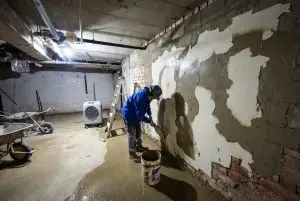
- The Problem: Many homeowners (and some contractors) try to “waterproof” limestone by coating it in non-breathable gray cement or waterproof paint.
- The Consequence: This traps moisture inside the stone. In the winter, that trapped water freezes and expands, causing the face of the limestone to flake off—a process called spalling.
2. Mortar vs. Stone: The Sacrificial Lamb
In a properly built historic foundation, the mortar is designed to be softer than the stone. This ensures that any structural stress or moisture damage happens to the easily replaceable mortar joints rather than the limestone blocks themselves.
- The Danger of Portland Cement: Using modern, high-strength cement to patch a limestone wall is a common mistake. Because modern cement is harder than the stone, it won’t “give” when the house shifts. Instead, it forces the limestone blocks to crack.
3. The “Stack” Effect and Movement
Limestone foundations are often “gravity walls,” meaning they rely on the sheer weight of the stones stacked on top of each other. Over 100+ years, the Drought-to-Deluge cycle of Kansas soil can cause these stones to shift or “belly” inward.
- What to watch for: If you see stones beginning to bulge toward the center of the basement or if the mortar is crumbling into dust on the floor, the wall is losing its structural integrity.
4. Why Traditional Piering is Different
If a limestone foundation begins to settle, you can’t always just “jack it up” like a concrete beam. The individual stones can move independently. Stabilization often requires a combination of our Stratos Pier® System to reach solid strata and specialized masonry work to ensure the load is distributed across the entire stone footprint.
Tips for Historic Homeowners
- Manage Your Gutters: Since limestone is porous, keeping water away from the exterior is your #1 defense. Ensure your gutters are clean and discharging far from the wall.
- Avoid “Quick Fix” Sealants: Never apply heavy rubberized coatings to the interior of a limestone wall without professional advice.
- Check the Grading: Ensure the soil around your historic home hasn’t “shrunk” or created gaps where water can pool against the stone.
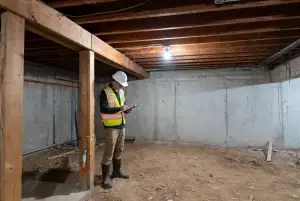
Preserve your piece of Kansas history. Limestone foundations require an expert eye that respects the original craftsmanship while applying modern engineering. If your historic home is showing signs of cracks or shifting, contact Advanced Systems of NE Kansas for a specialized inspection.